Subtle look for work and school
Clear trays are far less noticeable than braces in everyday conversation, photos, and meetings.
Serving Cincinnati, Ohio & surrounding areas
Straighten your teeth with clear aligners that fit your day-to-day life. Get a personalized plan with realistic timelines and appointment options that work around school, work, and commuting in Cincinnati.
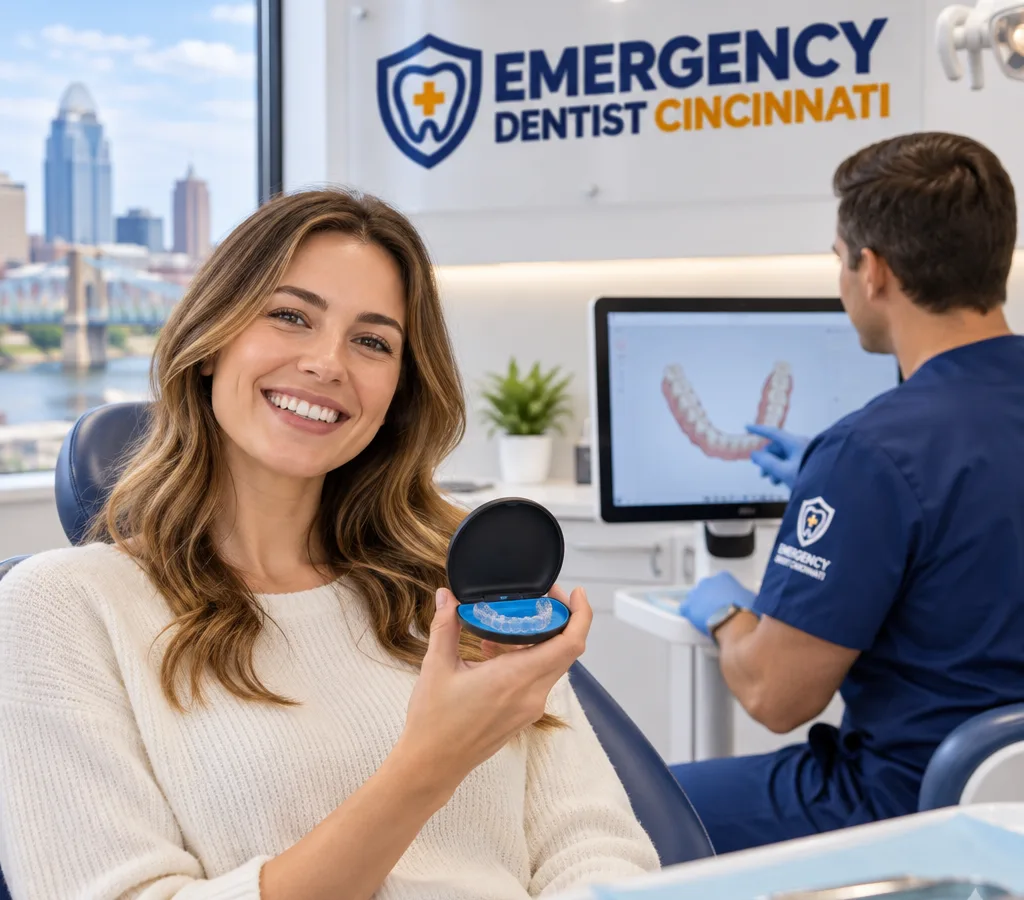
If you searched for Invisalign Cincinnati, you are probably looking for a straighter smile without brackets and wires. Invisalign uses a series of custom clear aligners that gently move teeth over time. You wear them most of the day, take them out to eat and brush, and switch to the next set on the schedule your clinician sets.
Our team at Emergency Dentist Cincinnati provides Invisalign treatment in Cincinnati, Ohio with a focus on clear planning, practical expectations, and check-ins that keep your progress on track. Because aligners depend on consistent wear, we spend time up front on fit, comfort, and the habits that make treatment predictable.
Cincinnati schedules are rarely simple. From downtown commutes and game-day traffic near Great American Ball Park to packed calendars in areas like Hyde Park, Oakley, and Clifton, convenience matters. We aim to make the appointment cadence and follow-up routine easy to keep, because that is what keeps aligner treatment moving.
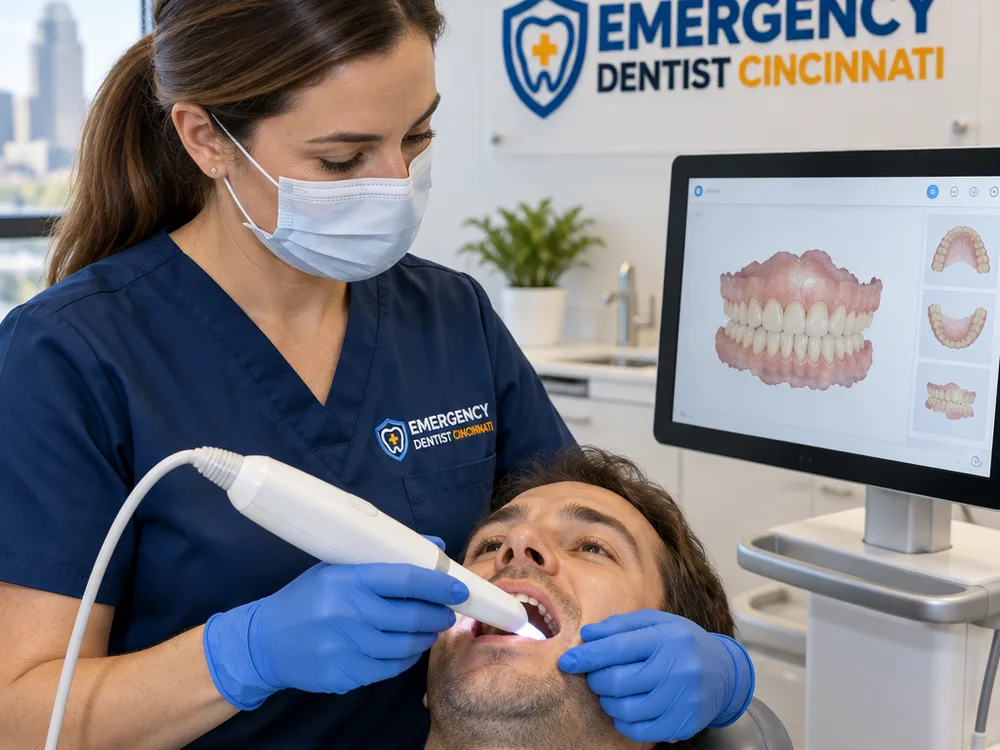
Invisalign is not a one-visit purchase. It is a plan built from records and then managed as your teeth respond.
Typical Invisalign steps include:
A key detail many people miss: clear aligners work best when teeth are healthy and stable first. If you have active tooth pain, swelling, or a broken tooth, it is smart to address that before starting orthodontic movement. Many people looking for Cincinnati Invisalign are also trying to fit care into a busy week; a clear sequence and realistic checkpoints help treatment stay on schedule.
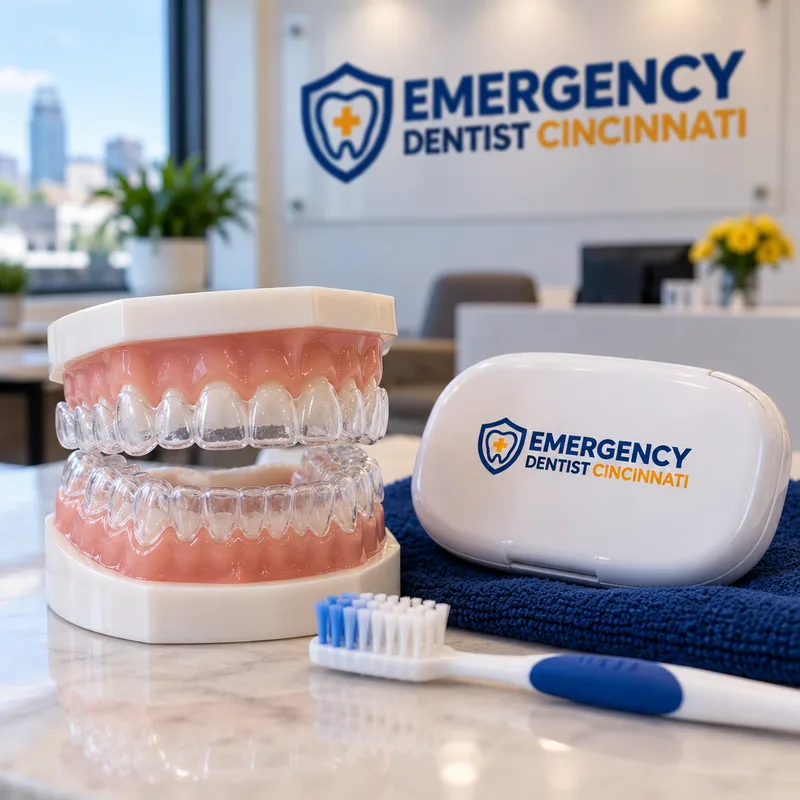
Clear trays are far less noticeable than braces in everyday conversation, photos, and meetings.
No special food rules. You take aligners out for meals, then brush and put them back in.
Brushing and flossing are easier than with fixed brackets, which helps reduce gum irritation and staining risk.
Treatment is built from scans and scheduled check-ins, so you know what the next step is and when it happens.
If you are juggling I-71 or I-75 commutes, campus schedules near the University of Cincinnati, or family logistics in neighborhoods like Oakley or Westwood, aligners can be easier to live with than frequent wire adjustments.
Invisalign can be a good fit for many adults and teens who want to correct crowding, spacing, or bite concerns. The best way to know is an in-person evaluation because tooth movement depends on gum health, bone support, and how your bite functions.
Common reasons people start Invisalign in Cincinnati, Ohio include:
There are also times when clear aligners may not be the right first step. If you have untreated cavities, gum disease, or a tooth that needs repair, your clinician will typically recommend stabilizing those problems first. Another factor is wear time. Aligners require consistent daily wear to track; if that is not realistic for your routine, you may be better served by another orthodontic option.
If you are comparing choices and trying to find the right clinician, it helps to start with a practice that does comprehensive dental care. Many Invisalign patients also want a long-term relationship with dentists in Cincinnati, Ohio for cleanings, exams, and any restorative work that comes up during or after alignment.
In Cincinnati, Invisalign treatment typically ranges from about $3,000 to $7,500+, depending on case complexity, how many aligner sets are needed, and whether attachments or refinements are required. Mild spacing or crowding is usually on the lower end, while more involved bite corrections and longer treatment plans tend to cost more.
Your final fee is driven by the amount of tooth movement planned, expected treatment time, and the follow-up schedule. The most accurate number comes after an exam and digital records, when your clinician can outline the plan and what is included.
We discuss your goals, look at your bite, and confirm that teeth and gums are in shape for orthodontic movement.
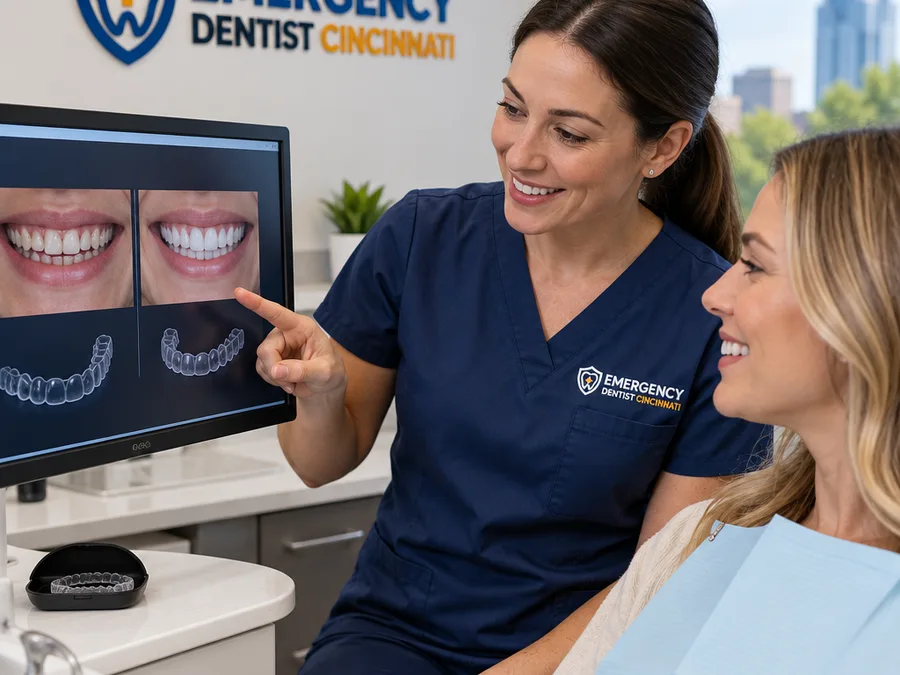
We take scans and supporting records to plan the direction and sequence of tooth movement, then review the plan with you before moving forward.
You receive your trays with clear instructions for daily wear, cleaning, what discomfort is normal, and what is not.
We monitor tracking and make adjustments if teeth are not moving as predicted. Refinements are planned when needed to finish well.
We help you transition into retainers and set expectations for long-term wear, because retention is what protects your result.
Most Invisalign treatments take several months to over a year, but the timeline depends on how much movement is needed and how consistently the trays are worn. Mild crowding or spacing can finish faster, while bite corrections and larger movements take longer. At your consultation, you will get a treatment length estimate based on your scan and bite evaluation.
Invisalign is usually more pressure than pain, especially for a day or two after switching to a new set of aligners. Some tenderness is normal because teeth are being moved. Sharp pain, gum swelling, or a tray that cuts the tissue is not normal and should be addressed at a check-in so fit can be corrected.
You should remove aligners for meals and for any drinks other than cool water. Eating with trays in can crack them and trap food against teeth, and hot drinks can warp the plastic. The routine that works for most people is: take trays out, eat, brush, then put them back in as soon as you can.
Many Invisalign plans use small tooth-colored attachments to help the trays grip and move teeth more precisely. Whether you need them depends on the movements planned, including rotation, vertical movement, and bite correction. If attachments are recommended, we explain where they go, how they feel, and how they affect removal and wear.
If you lose or crack a tray, you should contact the office promptly because wearing the wrong tray or going without one can stall movement. Depending on where you are in the sequence, you may be told to wear the previous aligner, move forward to the next one, or get a replacement. The right choice depends on tracking and timing in your plan.
Invisalign often works well with fillings and crowns, but existing dental work needs to be stable and the tooth needs enough structure for attachments if they are required. During your exam, we check restorations and discuss any repairs that should happen before starting aligners so the plan is not interrupted mid-treatment.
Tell us what you want to change about your smile and what your schedule looks like. We will review your options, outline a clear aligner plan, and give you a realistic timeline and cost range based on your exam.