Denture repair for cracks and broken teeth
If your denture breaks, the most important thing is restoring strength and bite alignment. We evaluate the break, check how it fits, and repair it so it closes properly.
Serving Cincinnati, Ohio & surrounding areas
Get a comfortable fit and clear next steps, with fast help when a denture breaks or stops fitting. We handle repairs, relines, and replacements with flexible scheduling.
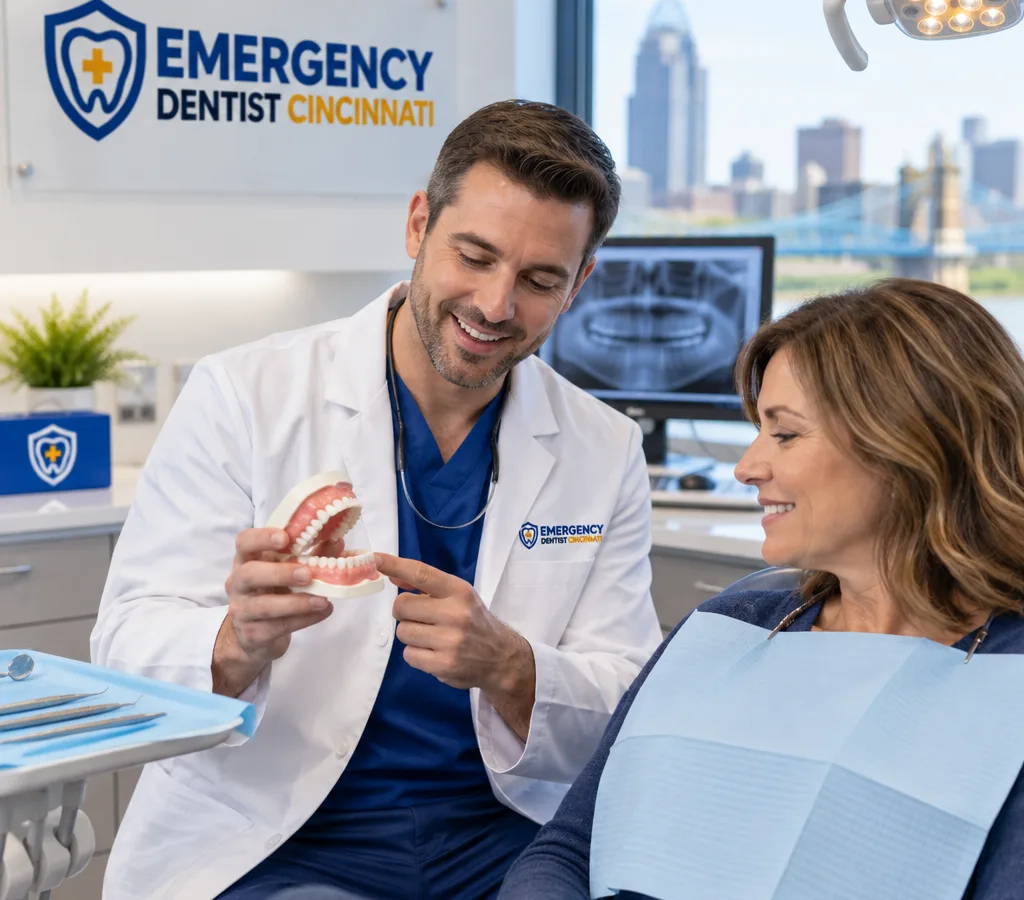
If you are searching for dentures in Cincinnati Ohio, you are probably trying to solve something practical: eating without pain, speaking clearly, and getting through the day without worrying that your denture will slip.
At Emergency Dentist Cincinnati, our denture care focuses on real-world comfort and function. That means checking the fit against your gums and bone support, verifying your bite—how the upper and lower teeth meet—and addressing sore spots before they turn into bigger problems. We also help when things change over time, because your mouth changes.
People seek Cincinnati dentures for different reasons. Some are getting dentures for the first time after extractions. Others have a set that used to fit well but now rocks, rubs, or breaks. Many patients simply need a repair and want to know what is realistic for timing and cost. Whatever brought you in, the goal is the same: a denture that stays stable, feels smooth, and lets you eat and talk with confidence.
If your denture is cracked, has a missing tooth, or is rubbing and causing sores, do not wait it out. Ill-fitting dentures can inflame tissues and make future adjustments harder. Getting the fit checked early is usually the simplest path.
If your denture breaks, the most important thing is restoring strength and bite alignment. We evaluate the break, check how it fits, and repair it so it closes properly.
When a denture starts to feel loose, a reline can improve the fit by reshaping the inside surface to match changes in your gums. We will tell you if a chairside reline is appropriate or if a lab process is safer for your case.
A small pressure point can cause a big ulcer. We mark high spots, smooth the acrylic, and recheck function so you can wear your denture without pain.
If your denture is warped, repeatedly cracking, or no longer supports your bite, replacement may be the best long-term option. We explain what will change in the new set and what will stay the same.
Partials replace several missing teeth while using remaining teeth for support. We assess the health of those supporting teeth and discuss clasp style, comfort, and appearance.
If you are transitioning after extractions, we can talk through what to expect in the first weeks and why follow-up adjustments are normal as swelling changes.
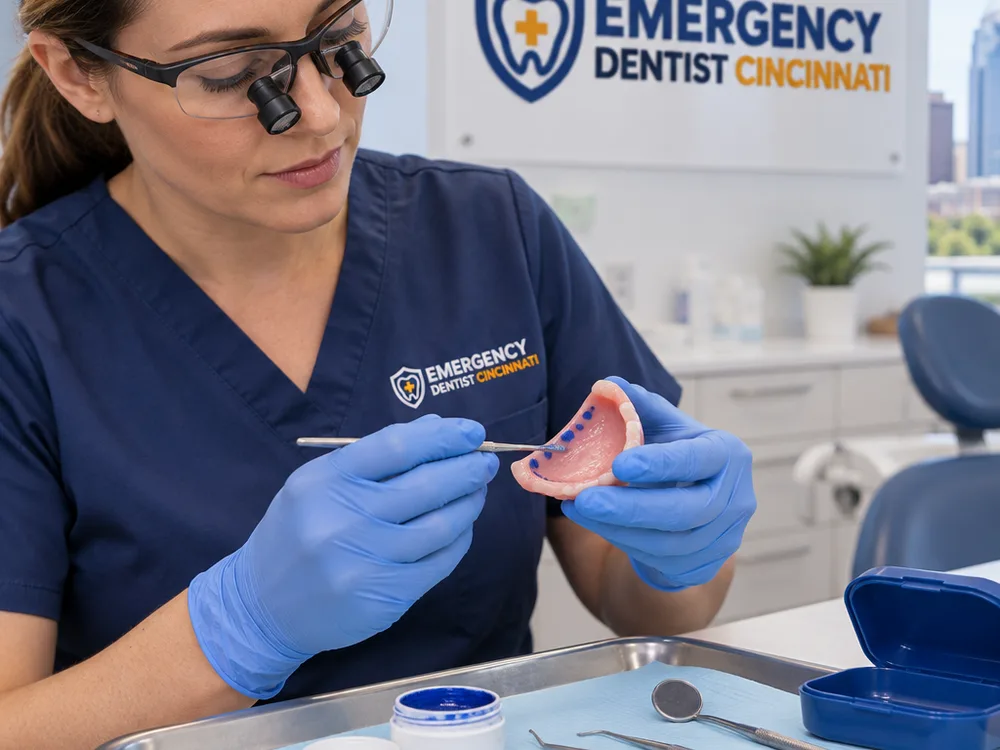
A denture appointment should be clear and practical. We start with your main concern—pain, looseness, a break, chewing, or appearance—then examine your mouth and your denture.
Fit and tissue check: We look for sore areas, redness, ulcers, and signs of fungal irritation. If you are wearing adhesive daily, we talk about whether that is masking a fit problem.
Bite and function check: Bite changes can cause jaw soreness, clicking, or uneven wear. We assess how your denture meets when you close and whether adjustments or a reline are likely to help.
Repair or plan: For a broken denture, we inspect the crack pattern and base thickness. Some breaks are a simple repair. Others signal a fit or bite issue that needs addressing to prevent repeat fractures.
You will leave with a straightforward plan: what we can do now, what may need lab work, and what follow-up is realistic. If you also need urgent relief for pain or swelling, an emergency dentist in Cincinnati can help stabilize the problem while the denture solution is arranged.
Tell us what is happening: broken denture, loose fit, sore spots, or a tooth missing from the appliance. We schedule based on urgency and what you need done first.
We evaluate your gums and any remaining teeth, then assess your denture for fit, bite, wear, and stability. If you have had recent extractions, we account for normal tissue changes.
Many adjustments and some repairs can be handled quickly. When lab work is needed, we explain the steps and what you can do in the meantime to stay comfortable.
It is common to need minor refinements after a repair, reline, or new denture. We focus on eliminating sore spots, keeping the bite balanced, and helping you wear the denture consistently.
Dentures in Cincinnati typically range from about $700 to $3,500+ per arch, depending on materials and whether you need a partial, a full denture, or an immediate denture after extractions. A basic economy denture is usually the lowest-cost option, while premium teeth, stronger bases, and more detailed customization increase the price.
Your final cost depends on fit issues, the need for a reline, bite corrections, any extractions, the condition of remaining teeth for a partial, and whether lab work is required. We confirm the exact cost after an in-person evaluation and a clear treatment plan.
A lot of denture frustration comes from doing the wrong fix. The right choice depends on what changed.
When a repair is usually enough: A clean crack or a single tooth that came out can often be repaired if the denture still fits well and your bite has not shifted. We still check fit, because repeated fractures often trace back to looseness or bite imbalance.
When a reline makes sense: If the denture feels loose, clicks, rocks when you chew, or you need more adhesive than before, your gums may have changed. A reline can restore contact between the denture base and your tissues. A hard reline is common for long-term fit, while a soft reline can be helpful when tissues are tender.
When replacement is the better investment: If the denture is worn down, the teeth are flattened, the base is thin, or the bite is off enough to cause jaw discomfort, replacement may cost more up front but tends to be more predictable than repeated repairs.
If you have natural teeth remaining and are weighing a partial, the health of those teeth matters. Gum disease or loose teeth can change whether a partial will stay stable. For painful teeth or swelling that is affecting your denture fit, emergency tooth pain care can address the dental cause while we plan denture stabilization.
“My lower denture started rubbing so badly I could not wear it for work. The adjustment appointment was straightforward and I left with the sore spot fixed and a plan for a reline.”
“I cracked my denture and was worried I would be without it for days. They explained what could be repaired quickly and made sure my bite felt even again before I left.”
Some denture repairs can be handled the same day, especially simple cracks or a tooth that needs to be reattached, but timing depends on the break and whether the denture still fits correctly. We check the fit and bite first because repairing a denture that no longer seats properly often leads to another break.
Dentures often feel loose when your gums and underlying bone change shape over time, which reduces suction and stability. In many cases a reline restores the fit, but we also rule out bite changes and worn denture teeth, which can make the denture shift during chewing.
New dentures commonly cause a few sore spots during the first days because your tissues are adapting to pressure. The goal is not to tough it out; small adjustments are normal and can prevent ulcers and inflammation that make wearing the denture harder.
A small amount of adhesive can be helpful for some people, but needing adhesive every day to keep a denture in place often points to a fit issue. If you rely on adhesive to stop rocking or rubbing, a reline or adjustment may be the better solution.
Most patients are advised to remove dentures at night to let the tissues rest and to reduce the risk of irritation and fungal infection. If you have specific medical reasons to wear them at night, we can discuss safe routines and hygiene that match your situation.
Stop wearing the denture if it is creating an ulcer, keep the area clean, and avoid attempting to grind or reshape the denture at home. Bring the denture in for an adjustment so the pressure point can be located and relieved without damaging the fit.
Dentures can last for years, but many need adjustments, relines, or replacement as your mouth changes and the teeth wear down. If you notice loosening, frequent sore spots, or repeated fractures, it is a sign to have the denture evaluated rather than continuing with temporary fixes.
If your denture is broken, loose, or painful, tell us what is happening and when you need relief. We will walk you through the fastest safe option and what to expect for fit, comfort, and timing in Cincinnati.