Fast, focused diagnosis
We start by pinpointing the cause of your pain using a targeted exam and imaging, then explain what we found in plain language.
Serving Cincinnati, Ohio & surrounding areas
When tooth pain hits, you need answers fast. Our Cincinnati team focuses on diagnosing the cause, calming the pain, and saving natural teeth with careful, modern endodontic treatment.
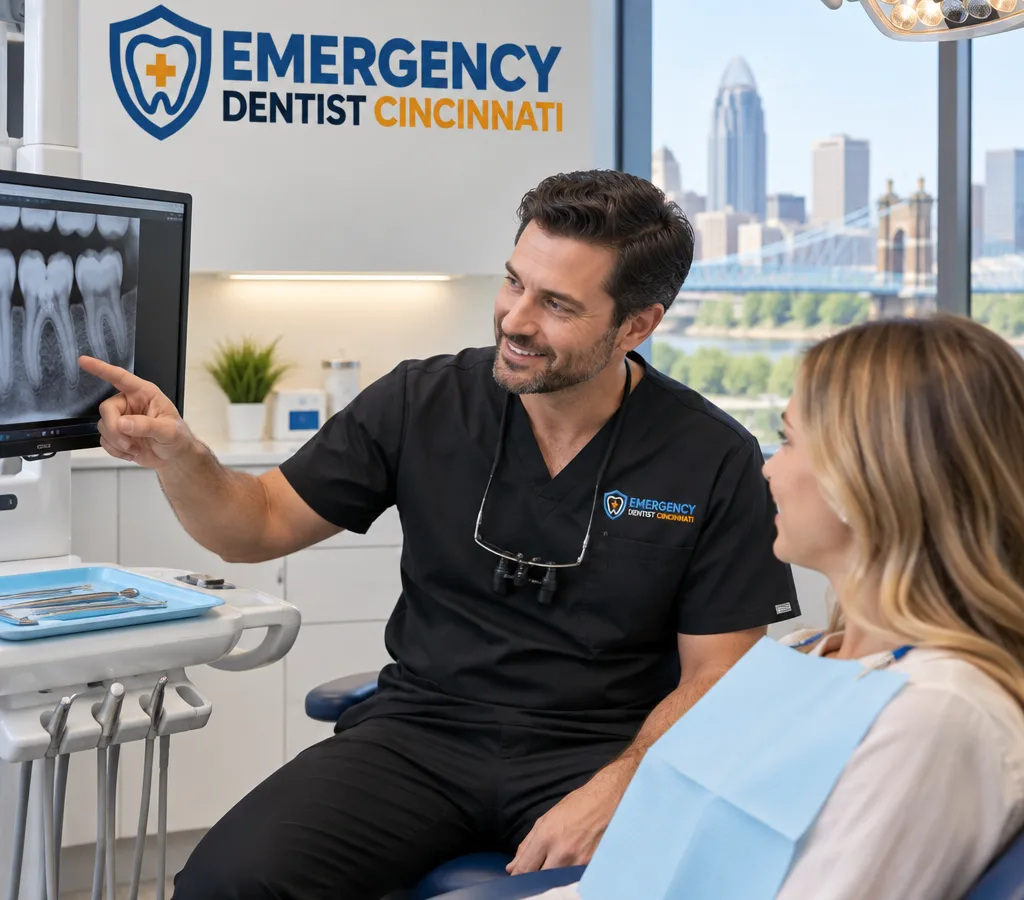
If you are searching for an endodontist Cincinnati patients trust, you are usually dealing with one of two things: pain that will not let up, or a tooth that your general dentist believes needs endodontic care.
Endodontics focuses on the inside of the tooth. That includes the dental pulp, the root canal system, and the tissues around the root tip. When bacteria reach the pulp through deep decay, a cracked tooth, leaking fillings, or trauma, the tooth can become inflamed or infected. The result can be sharp pain, lingering sensitivity to hot or cold, pain with chewing, swelling, or a bad taste.
A key part of Cincinnati endodontics is accurate diagnosis. Several different problems can feel similar, and treatment choices depend on what we see clinically and on imaging. We look for pulpitis versus necrosis, inflammation at the root tip, tooth cracks that affect prognosis, and previous root canal treatment that may need retreatment.
Your appointment is built around clarity: what is causing your symptoms, whether the tooth can be saved, and what the next step should be today.
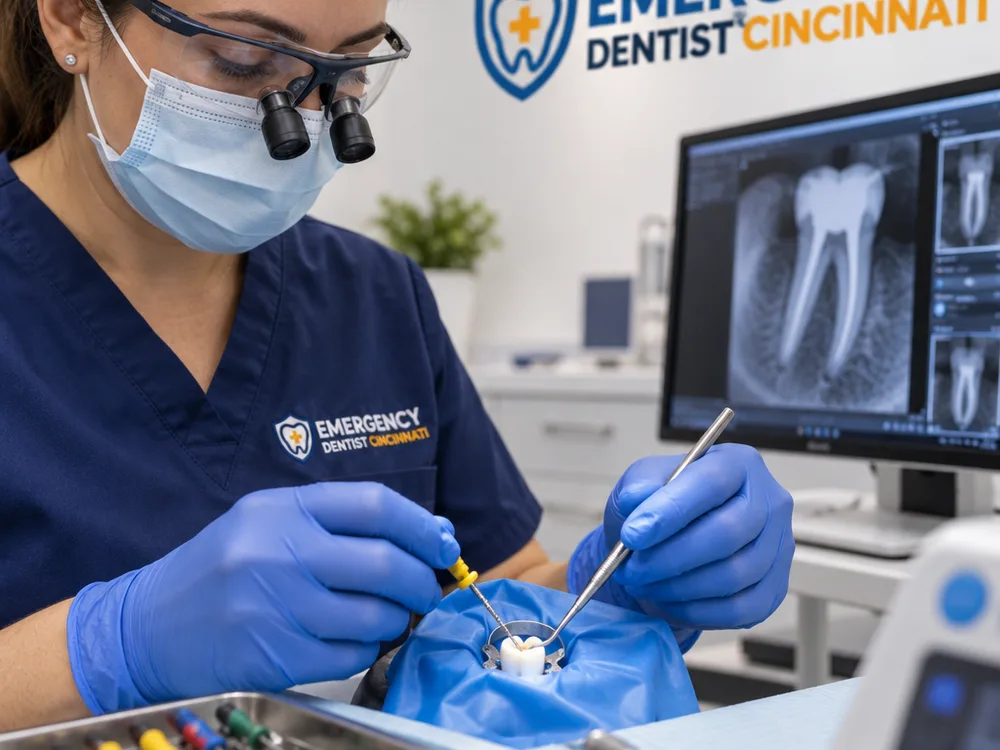
Most endodontic visits start with a referral or urgent symptoms. After a focused exam and imaging, we recommend the most conservative option that addresses the problem.
Root canal treatment: Done when the pulp is irreversibly inflamed or infected. The goal is to clean, shape, disinfect, and seal the root canal system so the tooth can function again.
Root canal retreatment: Sometimes a tooth that had a prior root canal develops new symptoms months or years later. Retreatment can be appropriate when there are missed canals, new decay, a leaking restoration, or complex anatomy.
Cracked-tooth evaluation: Cracks can cause biting pain that comes and goes. Determining the crack’s location and depth is critical because some cracks are restorable and others are not.
Trauma care: A fall or sports injury can damage the pulp even if the tooth looks intact. We assess vitality, infection risk, and whether the tooth needs treatment now or careful monitoring.
Apicoectomy: When non-surgical retreatment is not the best option, microsurgery can treat infection at the root tip while preserving the tooth structure above.
We start by pinpointing the cause of your pain using a targeted exam and imaging, then explain what we found in plain language.
Local anesthesia, isolation with a rubber dam, and efficient treatment steps are used to keep you comfortable and reduce post-visit soreness.
When a natural tooth can be predictably saved, endodontic care is often the most conservative path compared with extraction and replacement.
If you were referred, we share findings and next-step recommendations so your general dentist can restore the tooth promptly.
Toothaches do not follow a calendar. We prioritize patients who cannot sleep, cannot chew, or have swelling and need help quickly.
Pain is useful information, but it is not a diagnosis by itself. Two different teeth can refer pain to the same area. Sinus pressure can mimic upper tooth pain. A high bite on a new filling can feel like a deep problem. Our job is to sort this out and avoid treating the wrong tooth.
A typical endodontic evaluation includes:
If you are coming from work or commuting across Cincinnati, we keep the appointment efficient and decision-oriented. You will leave knowing which tooth is involved, whether endodontic treatment is recommended, and what the timeline looks like for restoring the tooth afterward.
If you are also comparing providers, our main overview of dentists in Cincinnati Ohio can help you think through the broader care team and how endodontic treatment fits into a complete plan.
We confirm the diagnosis and review options, including what happens if treatment is delayed. If the tooth is not restorable, we tell you before starting endodontic work.
We fully numb the area and place a rubber dam to keep the tooth clean and dry. This also helps prevent irritation from disinfecting solutions.
We remove inflamed or infected tissue, shape the canals with specialized instruments, and disinfect to reduce bacteria inside the tooth.
The canals are filled and sealed. Depending on the tooth and condition, a temporary filling may be placed until your general dentist completes the final restoration.
We explain what is normal during healing, what is not, and when to schedule the crown or definitive restoration. A timely restoration helps prevent fracture and reinfection.
Endodontic treatment in Cincinnati typically ranges from about $900 to $2,200 per tooth, depending on which tooth is treated and how complex the canal anatomy is. Front teeth are often at the lower end, while molars usually cost more because they have more canals and take longer.
Your final fee can change based on whether this is a first-time root canal or a retreatment, whether additional imaging is needed, and whether there is significant infection or a complicated restoration to work around. The exact cost is confirmed after your endodontic evaluation and diagnostic imaging.
“I went in convinced I would lose the tooth. They explained what was actually going on, treated it the same day, and the pain finally stopped that night.”
“I had a root canal years ago that started hurting again. The retreatment was straightforward, and they sent a clear report to my dentist so I could get the crown handled quickly.”
“They were calm and direct. The part I feared most was the numbing, and it ended up being the easiest dental visit I have had in a long time.”
Yes, we prioritize appointments for severe pain, swelling, or a tooth that is painful to bite on, because these symptoms often indicate an active infection or irreversible pulp inflammation. Once we evaluate the tooth and take the necessary imaging, we can often start the appropriate endodontic treatment the same day when clinically appropriate.
Many root canal cases can be completed in one visit, especially when the tooth can be fully cleaned and sealed comfortably that day. Some situations take two visits, such as when there is significant infection, complicated anatomy, or when we need time with medication inside the tooth before sealing.
A properly anesthetized root canal is usually felt as pressure rather than pain during treatment, and many patients say it is easier than living with the toothache. Mild soreness afterward is common for a few days, especially when the tooth was very inflamed, and it is typically managed with the aftercare instructions we provide.
Often, yes, especially for molars and premolars that take heavy chewing forces, because they are more likely to fracture without full coverage. The exact restoration depends on how much tooth structure remains and what your general dentist recommends; we coordinate our findings so the final restoration protects the tooth and reduces reinfection risk.
Retreatment addresses the infection by re-entering the tooth and re-cleaning and re-sealing the canal system from the top. An apicoectomy treats persistent infection by addressing the root tip surgically, usually when retreatment is not ideal due to anatomy, posts, or other restorative factors. We recommend the approach that fits the tooth’s condition and long-term prognosis.
Keep the area clean, avoid chewing on the painful side, and follow any instructions your dentist provided regarding temporary fillings or antibiotics. If you have facial swelling, fever, or trouble swallowing, seek urgent medical attention first, because those symptoms can indicate a spreading infection that needs immediate evaluation.
Tell us what you are feeling and when it started. We will schedule an endodontic evaluation, explain what is causing the pain, and outline the treatment options that make sense for your tooth in Cincinnati.